
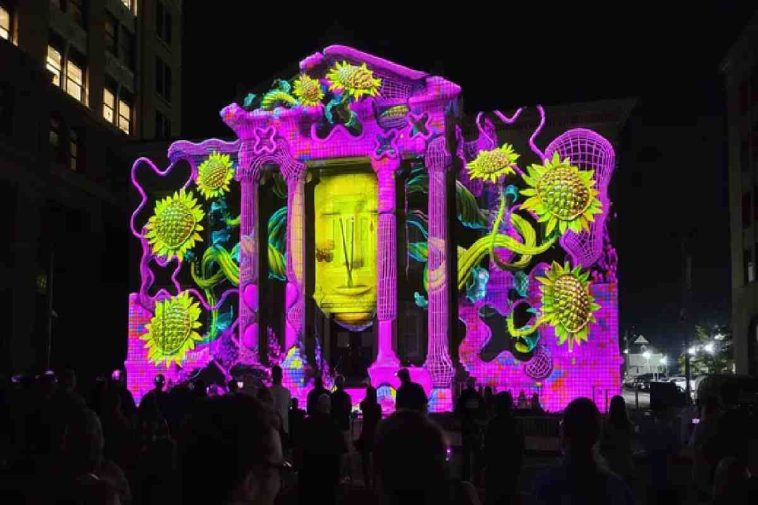
Once confined to experimental art spaces and theatrical stages, projection mapping has evolved into one of the most striking visual mediums of the modern age. It now lights up city landmarks, transforms live events, redefines advertising campaigns, and reshapes how audiences experience architecture and storytelling. By blending technology with imagination, projection mapping turns ordinary surfaces into living, moving canvases.
As the medium continues to grow, understanding its history, techniques, and future direction reveals why projection mapping has become such a powerful tool across industries and cultures.
The Evolution of Projection Mapping
From Shadow Play to Digital Spectacle
The roots of projection mapping stretch back centuries. Long before digital projectors existed, early storytellers used light and shadow to create visual narratives. Shadow plays in Asia and Europe relied on simple light sources and cut-out figures to animate stories on flat surfaces. These performances laid the conceptual foundation for using light as a storytelling medium.
The invention of the magic lantern in the 17th century marked a major leap forward. Images painted on glass slides were projected onto walls and backdrops, captivating audiences with moving visuals. Over time, these techniques found a home in theater, where projected scenery enhanced stage productions.
The true turning point arrived in the late 20th century with the rise of digital technology. Computers, digital projectors, and video editing software allowed artists to precisely control imagery, scale, and timing. Surfaces no longer needed to be flat. Buildings, sculptures, and everyday objects became potential canvases. Projection mapping, as we know it today, emerged from this convergence of art and computation.
How Modern Technology Changed the Medium
In the 21st century, projection mapping has grown rapidly thanks to advances in processing power, software, and projection hardware. Artists now use sophisticated tools to map visuals onto complex three-dimensional forms with remarkable accuracy.
Software platforms such as MadMapper, Resolume, TouchDesigner, and Notch allow creators to align visuals perfectly with physical structures. These tools support real-time rendering, generative visuals, and data-driven animation. High-resolution projectors and laser technology deliver brighter images that remain visible even in large outdoor environments.
New capabilities have expanded creative possibilities. Projections can now respond to music, movement, weather, or audience interaction. This responsiveness transforms projection mapping from a passive visual experience into an immersive and participatory one.
Influential Artists and Creative Studios
Several artists and studios have helped shape the global projection mapping landscape. Data-driven artist Refik Anadol uses artificial intelligence and machine learning to transform vast datasets into immersive visual environments. Miguel Chevalier’s work explores digital abstraction in public spaces, blending architectural heritage with contemporary visuals.
Creative studios such as Moment Factory, Ouchhh, and AntiVJ have produced large-scale installations for cities, cultural institutions, and global brands. Their work demonstrates how projection mapping can exist at the intersection of art, entertainment, and public engagement. These pioneers continue to influence a new generation of artists, proving that technical innovation and creative vision are equally essential.
Tools and Techniques Behind Projection Mapping
Software and Hardware Essentials
At its core, projection mapping relies on a careful balance of software and hardware. On the creative side, tools like Blender, Cinema 4D, and Adobe After Effects are commonly used for modeling, animation, and visual design. These programs allow artists to create detailed content that matches the geometry of physical surfaces.
Mapping software plays a crucial role in aligning visuals with real-world objects. Programs such as MadMapper and HeavyM allow creators to define projection zones, adjust perspective, and fine-tune alignment. This step ensures that visuals appear to wrap seamlessly around structures.
Hardware selection is equally important. Projectors vary in brightness, resolution, and throw distance. Large outdoor installations often require high-lumen laser projectors to compete with ambient light. Smaller indoor projects may benefit from compact, high-resolution units. The right combination of tools sets the stage for a successful projection.
Artistic Techniques That Bring Projections to Life
Technical precision alone does not create compelling projection mapping. The artistry lies in how visuals interact with space. Techniques such as masking, layering, and illusion-based animation allow artists to make buildings appear to crumble, bend, or come alive.
Storytelling plays a central role. Projections that follow a clear narrative arc tend to resonate more deeply with audiences. Synchronizing visuals with music or live performance can heighten emotional impact. Some artists incorporate real-time data or audience input, allowing projections to evolve throughout an event.
When technology supports creativity rather than overshadowing it, projection mapping becomes a powerful storytelling medium rather than a technical demonstration.
Challenges and Practical Advice for Beginners
For newcomers, projection mapping can feel intimidating. Common challenges include misalignment, distorted visuals, and unexpected lighting conditions. Testing projections on-site is essential, as surface texture, color, and ambient light can significantly affect results.
Beginners benefit from starting small. Experimenting with simple shapes or indoor environments builds confidence before tackling large-scale projects. Collaboration also plays an important role. Working with sound designers, programmers, or architects can expand creative possibilities and improve problem-solving.
Patience and experimentation are key. Projection mapping rewards persistence, and each project offers lessons that refine both technical skill and artistic vision.
Projection Mapping Across Industries
Transforming Live Events and Experiences
Projection mapping has become a cornerstone of modern event design. From concerts and festivals to corporate launches and weddings, it allows organizers to create immersive environments that adapt throughout an event.
A single venue can shift moods through projected visuals, moving from subtle ambiance to dramatic spectacle. At festivals, projections often extend beyond stages to surrounding architecture, enveloping audiences in a unified experience. Interactive elements, such as audience-triggered visuals, deepen engagement and create memorable moments.
This flexibility makes projection mapping a valuable tool for designers seeking to create experiences rather than static settings.
Advertising and Brand Storytelling
Brands have embraced projection mapping as a way to break through visual noise. Unlike traditional advertising, mapped projections transform public spaces into temporary spectacles that capture attention organically.
High-profile product launches often use projection mapping to turn buildings into dynamic billboards. Retailers use animated storefronts to tell brand stories after dark, drawing in foot traffic. These experiences blur the line between marketing and art, creating emotional connections that extend beyond a single interaction.
Because projections are temporary and site-specific, they also create a sense of exclusivity and urgency that traditional media often lacks.
Reimagining Architecture and Public Space
Architectural projection mapping has reshaped how people experience buildings and landmarks. Historic structures become canvases for cultural storytelling, while modern architecture gains new layers of meaning through light and motion.
Public festivals frequently use projection mapping to celebrate heritage, community, or global events. By animating familiar landmarks, artists encourage audiences to see their surroundings in new ways. These projects often foster a sense of shared experience and civic pride.
Projection mapping demonstrates how art and architecture can coexist, enriching public spaces without altering their physical form.
The Future of Projection Mapping
Augmented Reality and Interactive Layers
The integration of augmented reality is opening new dimensions for projection mapping. By combining projected visuals with AR overlays accessed through mobile devices, artists can create multi-layered experiences that respond to individual viewers.
This fusion allows digital elements to exist simultaneously in physical and virtual space. Audiences may interact with projections, uncover hidden content, or influence visuals in real time. As AR technology becomes more accessible, these hybrid experiences are likely to become more common.
Sustainability and Responsible Design
Environmental considerations are increasingly shaping the future of projection mapping. Artists and producers are adopting energy-efficient projectors, reducing material waste, and designing installations with minimal environmental impact.
Projection mapping also serves as a medium for environmental storytelling. Artists use light to visualize climate data, ecological changes, and sustainability themes, raising awareness through immersive narratives. This dual role as both art and advocacy highlights the medium’s broader social potential.
Skills for the Next Generation of Artists
Aspiring projection mapping artists need a diverse skill set. Technical proficiency in 3D modeling, animation, and mapping software is essential. Equally important are storytelling skills, visual design principles, and an understanding of spatial awareness.
Collaboration remains a defining feature of successful projects. Working across disciplines fosters innovation and prepares artists for complex installations. As technology continues to evolve, adaptability and lifelong learning will be critical for staying relevant in this fast-moving field.
A Medium Where Art and Technology Converge
Projection mapping stands at the crossroads of art, architecture, and digital innovation. Its ability to transform spaces, tell stories, and engage audiences has reshaped how we experience the built environment.
As tools become more powerful and accessible, projection mapping will continue to evolve, offering new ways to explore creativity and connection. Whether used for art, entertainment, or communication, it remains a vivid reminder that light, when guided by imagination, can redefine reality itself.